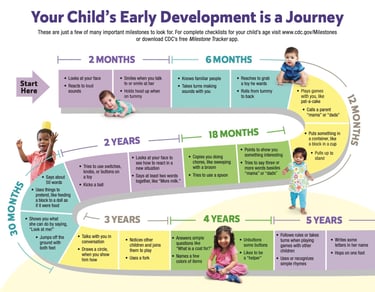
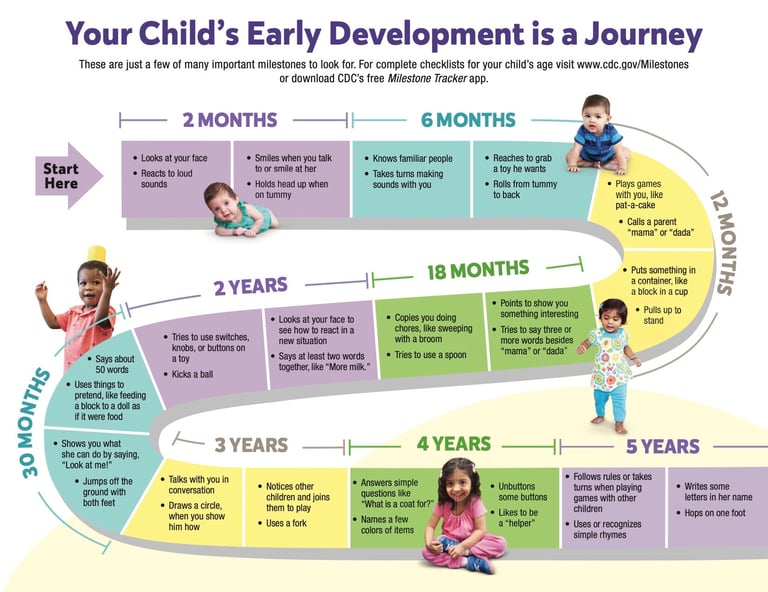
Development Milestones Birth to 5 years old.
Sensory Friendly Family Performance at the Clemens Center

On Saturday, March 7, 2026 at 2:00 p.m., the Clemens Center will present Tri-Cities Opera’s The Three Bears, a sensory‑friendly opera designed for children and adults on the autism spectrum, those with sensory sensitivities, and families new to live performance.


The relaxed 40‑minute show includes dimmed lighting, moderated sound, no flashing effects, live narration, quiet spaces, and freedom to move or vocalize, followed by a 15‑minute Q&A.

Benefits of daily routines for infants and toddlers

a little girl holding a bottle

Routines matter for infants and toddlers because they create predictability, security, and the foundation for healthy development. They help young children understand their world, regulate their emotions, and build trust in the people who care for them.

How Routines support emotional security:

  • Predictability of daily routines reduces stress, and children know what comes next (e.g., meals, naps, play) they feel safe and less overwhelmed.

  • Consistent caregiving patterns help infants and toddlers trust their needs will be met.

  • Easier transitions with routines makes shifting from one activity to another smoother.

How Routines support learning:

  • By having repeated patterns assists children with learning to manage their emotions, calm themselves, and anticipate changes for early self-regulation.

  • Predictable routines help the brain organize information and make sense of daily experiences supporting their cognitive development.

  • Toddlers beginning to participate in daily routines encourages independence and builds their confidence and autonomy.

How Routines support behavior:

  • Children are less likely to act out when they know what to expect and reduces challenging behaviors.

  • Consistent routines teach boundaries and help children understand limits with clear expectation.

  • When routines guide the day, it helps not just the child to stay consistent, but adults to be calmer and more effective with their daily activities.

How Routines support physical well-being:

  • Predictable nap and bedtime routines help regulate sleep cycles.

  • Regular meal and snack times support appetite regulation and nutrition.

  • Structured routines help caregivers stay organized and attentive.

a baby eating broccoli